
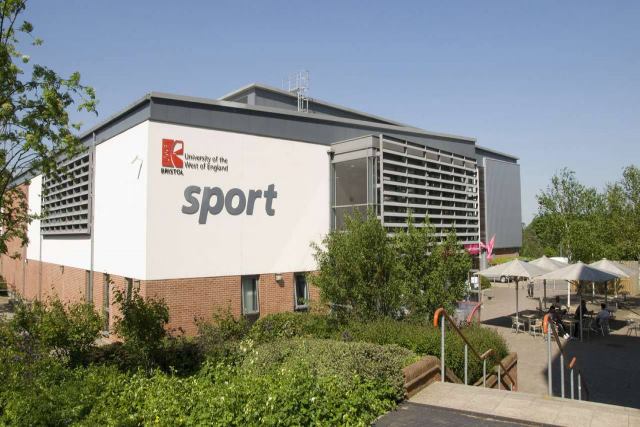
The University of West of England (UWE) has a long history that can be traced back to 1595, but it gained university status only in 1992. It places great emphasis on partnerships with many local, national and international business organizations. This is why the university offers many Erasmus and industry placement opportunities. The Telegraph ranked it 8th in its list of top universities for graduate employment. About 95.5% of all graduates start work or continue their higher education within 6 months of graduation. The UWE careers center was one of the finalists selected for the National Undergraduate Employability Award 2015. The university is socially active, organizing seminars on national social issues such as obesity and online safety. It also played a key role in Bristol's successful bid to become European Green Capital for 2015. Research Reference Framework 2014 rated 57% of its research as world-leading and internationally excellent. UWE ranks 62nd in the UK, is home to 27,000 students and offers more than 600 courses. The university's brokerage program ranks 6th in the country, and its social work program 10th.
Bristol is a city in southwest England with a population of 437,500. Between the 13th and 18th centuries, Bristol was among the top 3 English cities by tax revenue. Its fame has always been tied to the sea, as many expeditions to the New World set out from its port, one of them being that of John Cabot – the first European to land in North America. Bristol was overshadowed during the Industrial Revolution by Birmingham, Liverpool and Manchester, but now, with support from the National Lottery and other funding projects, the city is bursting with life with its many harborside bars, restaurants, museums and galleries. Bristol was named England's first Cycling City in 2008, and in 2015 it won the “European Green Capital” award. The city's thriving economy means higher prices and more expensive housing, but compared with other cities in the region it is more affordable. Bristol is one of England's 6 Science Cities and welcomes students with open arms.
Main programs and majors (for a detailed list, ask one of our consultants)
- Accounting, Economics and Finance
- Allied Health Professions
- Architecture and the Built Environment
- Art and Design
- Arts and Cultural Idustries
- Biological, Biomedical and Analytical Sciences
- Business, MBA, Management and Marketing
- Computer Science and Creative Technologies
- Education and Teaching
- Engineering Design and Mathematics
- Film and Journalism
- Geography and Environmental Management
- Health and Social Sciences
- Law and Legal Practice
- Nursing and Midwifery
- Sports, Animal and Land
Key information
Program length:
2-5 years for bachelor's programs
1-2 years for master's programs
Academic year:
2 semesters - September and January
Start of the year:
September and January (for some bachelor's and master's programs); February for Nursing only.
Application deadline:
January 15 is the recommended deadline for most majors. The final cutoff is June 30, but those applications will not be given priority.
March 24 for art and design
For master's programs it depends on the program – the earlier, the better. Counselling courses have specific deadlines.
For PhD/doctoral programs it depends on the program; the deadlines for business and law programs are November for an April start, June for an October start, and September for a January start.
Admission requirements:
Applicants with a high school diploma with a GPA of at least 5.0 will be considered. Master's admission requires a bachelor's degree.
IELTS
For bachelor's programs, a minimum of 6.0. For master's programs – 6.5.
Cambridge English: Advanced/Proficiency
For bachelor's programs, a minimum of 169. For master's programs – 176.
Scholarships and loans
The tuition fee for bachelor's programs is between £7250 and £9000. The UK government provides student loans with favorable repayment terms. Students begin repaying the loan only once they earn an annual salary of more than £21000. For more information, ask one of our consultants.
Master's program fees depend on the program. Taking out a loan for them is harder, but not impossible.
Accommodation:
University residence halls cost between £4200 and £5380 per year, depending on the residence and room type. Accommodation outside the university residence halls costs £2650-£4600 per year.