
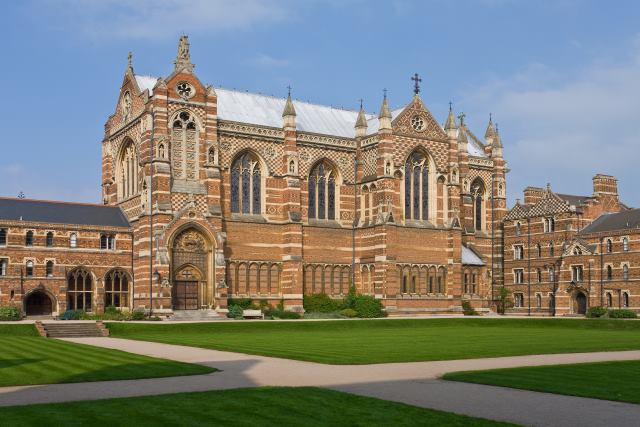
The University of Oxford is the oldest university in the English-speaking world. Founded in 1096, it existed before the Aztec Empire, Timbuktu, Genghis Khan and Notre-Dame de Paris. Whatever is said about the University of Oxford will never be enough – it is one of the most prestigious higher education institutions in the world, shaping and influencing global development for almost 10 centuries. The university ranks 2nd in the UK and 6th in the QS World University Rankings 2015/2016. Research Excellence Framework 2014 named Oxford the university with the largest volume of “world-leading” research, covering 12 subjects, and ranked it first in the UK for research quality. In total, 86% of all the university's research is considered “world-leading” and “internationally excellent.” It is the second-best university in the world for clinical and health subjects, the best in the UK for political science, and almost all of its subjects are in the top 10. Oxford's faculty are world-leading academics in their fields. The university counts 26 Nobel laureates, 26 British prime ministers, at least 30 world leaders and 120 Olympic medalists. Among the university's distinguished alumni are Oscar Wilde, Stephen Hawking, John Locke, Erasmus, David Cameron and many others.
The city of Oxford itself, where the university is located, is as beautiful as it is ancient. It has a cosmopolitan and youthful atmosphere. The nightlife and dynamic music scene add to the city's vibrancy. Its historic architecture is world-famous and attracts many tourists every year. The city is home to Britain's oldest museum (Ashmolean), as well as a number of fascinating artifacts such asAlfred’s Jewel – a piece of jewelry made of gemstones and gold dating from the 9th century; Albert Einstein's blackboard; a malevolent witch trapped in a bottle at the Pitt River museum; and the remains of a dodo bird. Oxford is an expensive city, and student life is concentrated in the university bars and societies.
Main programs and majors (For a detailed list, ask one of our consultants)
- Archaeology and Anthropology
- Biochemistry
- Biological Sciences
- Biomedical Sciences
- Chemistry
- Classical Archaeology and Ancient History
- Classics
- Classics and English
- Classics and Modern Language
- Classics and Oriental Studies
- Computer Science
- Computer Science and Philosophy
- Earth Sciences
- Economics and Management
- Engineering Science
- English Language and Literature
- English and Modern Languages
- European and Middle Eastern Languages
- Fine Art
- Geography
- History
- History (Ancient and Modern)
- History and Economics
- History and English
- History and Modern Languages
- History and Politics
- History of Art
- Human Sciences
- Law
- Materials Science
- Mathematics
- Mathematics and Computer Science
- Mathematics and Philosophy
- Mathematics and Statistics
- Medicine
- Modern Languages
- Modern Languages and Linguistics
- Music
- Oriental Studies
- Philosophy and Modern Languages
- Philosophy, Politics and Economics
- Philosophy and Theology
- Physics and Philosophy
- Psychology
- Psychology, Philosophy and Linguistics
- Theology and Religion
- Theology and Oriental Studies
Key information
Program length:
3-5 years for bachelor's programs
1-2 years for master's programs Academic year:
2 semesters - September and January
Start of the year:
September and January (for some programs only)
Application deadline:
October 15 for all majors
For master's and doctoral programs, deadlines fall between November and March, depending on the program, and the university recommends applying ASAP. Exceptions are the following programs – Postgraduate Certificate in Education, Saïd Business School Courses, Software Engineering Courses, Clinical Medical Degrees, Doctoral Programme in Clinical Psychology and Foreign Service Programme.
Admission requirements:
High school diploma with a minimum GPA of 5.75, depending on the major.
IELTS
For bachelor's programs, a minimum of 7.0, depending on the major. For master's programs, between 7.0 and 7.5. Exceptions are the following programs – Postgraduate Certificate in Education, Saïd Business School Courses, Software Engineering Courses, Clinical Medical Degrees, Doctoral Programme in Clinical Psychology and Foreign Service Programme.
TOEFL
For bachelor's programs, a minimum of 110, depending on the major. For master's programs, between 100 and 110. Exceptions are the following programs – Postgraduate Certificate in Education, Saïd Business School Courses, Software Engineering Courses, Clinical Medical Degrees, Doctoral Programme in Clinical Psychology and Foreign Service Programme.
Cambridge English: Advanced/Proficiency
For bachelor's programs: Cambridge English: Advanced – A; Cambridge English: Proficiency – B, depending on the major. For master's programs, between 185 and 191 (Advanced: B-A; Proficiency: C). Exceptions are the following programs – Postgraduate Certificate in Education, Saïd Business School Courses, Software Engineering Courses, Clinical Medical Degrees, Doctoral Programme in Clinical Psychology and Foreign Service Programme.
Scholarships and loans
The tuition fee for bachelor's programs is £9000. The UK government provides student loans with favorable repayment terms. Students begin repaying the loan only once they earn an annual salary of more than £21000. For more information, ask one of our consultants.
Master's and doctoral programs range from £4050 to £33750, MBA - £44775, EMBA - £64635. NHS England fully covers the fees for the 5th and 6th years of medical students.
Accommodation:
University residence halls cost between £3290 and £3740 per week, depending on the residence and room type. Accommodation outside the university residence halls can cost between £4680 and £5200.